Source ford gm automatic transmission fluid for Lubrication Cooling Sealing
Find 30 listings for ford gm automatic transmission fluid from suppliers in China. Buyers can compare specifications, prices, and packaging options for transmission fluids used in lubrication, cooling, and sealing applications.
Key considerations
Products List


Comprehensive Sourcing Guide
Strategic Sourcing Guide for Ford and GM Automatic Transmission Fluid
The procurement of automatic transmission fluid (ATF) for Ford and General Motors (GM) vehicles requires a rigorous approach that balances specific manufacturer engineering requirements with the broader capabilities of the global lubricant supply chain. Buyers seeking these fluids must navigate a complex landscape where "one size fits all" solutions are insufficient. The core keyword focus on Ford and GM implies a need for fluids that meet stringent OEM specifications for friction modification, thermal stability, and hydraulic performance. This guide outlines the essential technical, compliance, and commercial factors necessary for a successful sourcing strategy, relying strictly on verified product attributes and industry-standard procurement practices.
Technical Specifications and Base Oil Composition
When evaluating potential suppliers for ATF, the first critical step is to verify the base oil composition and additive package. The market offers a spectrum of fluid types, ranging from mineral-based to fully synthetic formulations. For high-performance applications typical of modern Ford and GM transmissions, the base oil type is a primary determinant of performance. Observed product data indicates the availability of both Semi-Synthetic Oil and Synthetic Oil options. Synthetic Oil generally offers superior thermal stability and oxidation resistance, which are crucial for the high-temperature environments found in modern automatic transmissions. Conversely, Semi-Synthetic Oil may be suitable for specific legacy applications or cost-sensitive scenarios, provided the additive package compensates for the base oil limitations.
The additive package is equally vital. The fluid must contain specific agents to ensure longevity and performance. Verified product attributes highlight the presence of Anti-Wear Additives, Antioxidants, Viscosity Index Improvers, and Friction Modifiers. Friction modifiers are particularly critical for Ford and GM applications, as these manufacturers often require specific friction characteristics to prevent shudder and ensure smooth gear engagement. Additionally, the presence of Dispersants helps keep the transmission clean by suspending contaminants, while Anti-Wear Additives protect critical components like gears and bearings. Buyers must confirm that the supplier's formulation explicitly includes these components, as the absence of any single category can lead to premature transmission failure.
Compliance, Certification, and Standard Verification
Compliance with international and OEM-specific standards is non-negotiable when sourcing transmission fluids. While specific OEM standards (such as Ford WSS-M2C or GM 6238M) are proprietary and often not publicly listed in general product catalogs, buyers must verify that the supplier adheres to recognized industry certifications. The available data confirms the presence of SAE (Society of Automotive Engineers) certification and ISO9001 certification among potential products. SAE certification indicates that the fluid meets specific viscosity and performance grades defined by the automotive industry, while ISO9001 demonstrates that the manufacturer operates under a quality management system.
Furthermore, product standards and models provide a framework for verification. The observed product data lists various model identifiers, including "atf," "Transmission," "Automatic Transmission Fluid," and specific codes like "JD8070" and "ALAD000234." These identifiers often correspond to internal product lines or specific fluid grades. However, the "prod_standard" field in the data varies, ranging from "decide by customers' requirements" to specific packaging standards like "1L" or "200kg/drum." This variability underscores the importance of a buyer-supplier dialogue where the specific OEM requirement is explicitly stated and confirmed in writing. Buyers should not assume that a product labeled "ATF" automatically meets Ford or GM specifications; they must request documentation proving that the fluid has been tested against the specific OEM standard required for their vehicle fleet.
Cost Drivers and Pricing Dynamics
The pricing of automatic transmission fluid is influenced by several dynamic factors, including the base oil type, the complexity of the additive package, and the volume of the order. The observed price range in the market spans from $0.80 to $8,000 USD. This wide variance is not indicative of a single product but rather reflects the difference between small retail units (e.g., 1L bottles) and bulk industrial shipments (e.g., 200kg drums or tanker loads). The Minimum Order Quantity (MOQ) also plays a significant role in the final cost per unit, with observed MOQs ranging from 1 unit to 6,000 units.
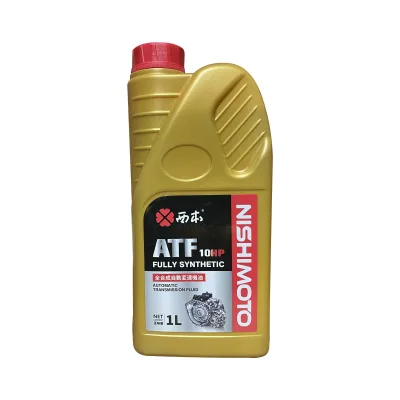
For buyers sourcing for a fleet or industrial application, the cost driver is often the transition from retail packaging to bulk packaging. The data shows packaging options including Plastic Buckets, Metal Buckets, Drums, and Cartons (e.g., 1L*12PCS Per Carton). Bulk purchasing in 200kg drums typically offers a lower cost per liter compared to 1L bottles, but it requires higher upfront capital and storage capacity. Buyers must calculate the total cost of ownership, which includes not just the unit price but also logistics, storage, and handling costs associated with the chosen packaging. Additionally, the "High Grade" and "High-Quality" designations in the product data suggest that premium formulations may command a higher price point, reflecting the cost of advanced synthetic base oils and specialized friction modifiers.
Typical Applications and Performance Requirements
Understanding the specific application of the fluid is essential to ensure compatibility with the transmission system. The observed product attributes list a wide range of applications, including Lubrication, Cooling, Rust Prevention, Sealing, and Shock Absorption. For Ford and GM vehicles, the fluid serves as a hydraulic medium that transmits power, cools the transmission, and lubricates moving parts. The "Appearance" of the fluid is typically a "Liquid Oil" or "Oily Liquid," often with a distinct color such as "Yellow," which can aid in leak detection and fluid identification.
The performance requirements for these applications are stringent. The fluid must maintain its viscosity across a wide temperature range, a property ensured by Viscosity Index Improvers. The Flash Point, observed at 231°C in some product data, is a critical safety and performance metric, indicating the temperature at which the fluid can ignite. A high flash point is desirable for preventing fluid degradation and fire hazards under extreme operating conditions. Furthermore, the fluid must provide effective rust prevention and sealing capabilities to protect the transmission internals and maintain hydraulic pressure. Buyers should verify that the selected fluid is explicitly rated for the specific transmission type (e.g., automatic, continuously variable) used in their Ford or GM vehicles, as using the wrong fluid can lead to severe mechanical damage.
Supplier Evaluation and Origin Considerations
Evaluating suppliers requires a careful review of their origin, production capabilities, and quality assurance processes. The observed product data indicates origins in Hebei, China, and Tianjin, China, with a general origin of "China." While these regions are known for significant manufacturing output, buyers must conduct due diligence to ensure that the specific supplier meets their quality expectations. The presence of "High-Quality" and "Excellent" quality designations in the product descriptions is a positive indicator, but it should be supported by third-party test reports and certification audits.
When evaluating a supplier, buyers should look for evidence of a robust quality management system, such as the ISO9001 certification mentioned in the data. Additionally, the ability to customize the product is a key differentiator. The data confirms that "Customization: Available," allowing buyers to request specific formulations, packaging, or labeling to meet their unique needs. This flexibility is particularly valuable for fleet managers who may require specific branding or packaging configurations. Buyers should also assess the supplier's capacity to meet the required lead times and their ability to scale production if order volumes increase. The "Standard" field noting "decide by customers' requirements" suggests a high degree of flexibility, but it also places the burden on the buyer to clearly define their requirements upfront.
Quality Control and Long-Term Procurement Strategy
Long-term procurement success depends on establishing a robust quality control framework and a strategic partnership with the supplier. Quality control should begin at the raw material stage, ensuring that the base oil and additives meet specified purity and performance standards. The observed product attributes, such as the inclusion of "Anti-Wear Additives" and "Antioxidants," highlight the importance of a well-formulated product. Buyers should request batch testing reports to verify that each shipment meets the agreed-upon specifications, particularly regarding viscosity, flash point, and friction characteristics.
For long-term procurement, buyers should consider the lifecycle of the fluid. A fluid that performs well initially but degrades quickly will increase maintenance costs and downtime. Therefore, the selection of a fluid with high-grade additives and a stable base oil is crucial. The "High Grade" and "Semi-Synthetic Oil" or "Synthetic Oil" options observed in the data represent different tiers of longevity and performance. Buyers should align their choice with the operational demands of their fleet; high-mileage or heavy-duty vehicles may require the superior protection of a fully synthetic fluid, while standard passenger vehicles might be adequately served by a high-quality semi-synthetic option.
In conclusion, sourcing automatic transmission fluid for Ford and GM vehicles requires a meticulous approach that prioritizes technical compatibility, certification compliance, and supplier reliability. By focusing on the specific base oil types, additive packages, and OEM standards, buyers can ensure that the fluids they procure will deliver the necessary performance and protection. The wide range of packaging options and customization capabilities available in the market offers flexibility, but it also demands careful planning to optimize costs and logistics. Ultimately, a successful sourcing strategy is built on a foundation of clear communication, rigorous quality control, and a deep understanding of the technical requirements of the transmission systems being serviced.
FAQs
What base oil types are available for automatic transmission fluid?
Semi-synthetic and synthetic oil options are available for automatic transmission fluid. These formulations include additives like anti-wear agents and antioxidants to ensure performance in Ford and GM vehicles.
Which certifications should I verify for transmission fluid suppliers?
You should verify SAE and ISO9001 certifications for transmission fluid suppliers. These standards confirm that the product meets automotive industry viscosity grades and that the manufacturer operates under a quality management system.
Can suppliers customize packaging for automatic transmission fluid orders?
Yes, suppliers offer customization for packaging requirements such as plastic buckets, metal buckets, or drums. This flexibility allows buyers to select options like 1L cartons or 200kg drums based on their specific storage needs.
How does the flash point affect transmission fluid safety?
The flash point indicates the temperature at which the fluid can ignite, with observed values around 231°C. A high flash point is crucial for preventing fire hazards and ensuring thermal stability during extreme operating conditions.
What additive packages are essential for Ford and GM transmissions?
Essential additives include friction modifiers, viscosity index improvers, and anti-wear agents. These components prevent shudder, maintain viscosity across temperatures, and protect gears and bearings from wear in automatic transmission systems.
Where are the primary manufacturing locations for these fluids?
Primary manufacturing locations include Hebei and Tianjin in China. Buyers should verify the specific origin of the product to ensure it aligns with their logistical preferences and supply chain requirements.
What is the typical price range for automatic transmission fluid?
The price range spans from 0.80 to 8000 USD depending on volume and packaging. Costs vary significantly between small retail units like 1L bottles and bulk industrial shipments such as 200kg drums.